I've excavated another shard of Agatha's life and writing. I may have known and forgotten, but I have discovered that Mrs Mallowan published at least one book using her married name. The book is entitled 'Star Over Bethlehem: and other stories'. I managed to buy a hard cover copy for just under £5 from Amazon and I believe it must be from the original print, since the lending dates start from about 1974. According to Amazon, this is a rare thing. There is a 50th anniversary edition published by Harper Collins Publishers Ltd (25 Sept. 2014). What makes the copy that I have managed to acquire particularly special is that it is ex Oxford library. I can't tell which library would have stocked it, but it is quite something to have the book from an area in which Mrs Mallowan lived. It might look a bit fly-blown and faded, but it will be treasured. It will also be read to help with the dialogue for the screenplay - when I get a minute to sort it all out.
Tell Brak
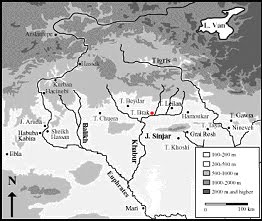
Site of archeological site in Northern Syria
Showing posts with label Agatha Christie. Show all posts
Showing posts with label Agatha Christie. Show all posts
Thursday, 19 May 2016


Thursday, 12 May 2016
My mistress' voice
I've completed the FutureLearn screenplay course. I confess to skipping all of the videos. Something about people pontificating about writing and so on makes me feel depressed. I thought I'd missed some of the activities, but find I've completed what I was supposed to do and have posted them here, which was useful.
Checking the course again has led to me thinking that I must stop procrastinating. It also made realise that my biggest hurdle is lack of self belief and the constant feeling that I am a total nobody; unpublished (creatively anyway), no relevant academic background, not famous, nothing. It makes me feel that whatever I do will not be taken seriously.
The other major hurdle to the screenplay is finding Agatha's voice. I want to be true to her, even the aspects of her personality and prejudices that I don't like. So it occurred to me to search for letters. And here's a couple of examples. The photo of Agatha at the bottom looks to have been taken at about the time I want to tell her story.


Checking the course again has led to me thinking that I must stop procrastinating. It also made realise that my biggest hurdle is lack of self belief and the constant feeling that I am a total nobody; unpublished (creatively anyway), no relevant academic background, not famous, nothing. It makes me feel that whatever I do will not be taken seriously.
The other major hurdle to the screenplay is finding Agatha's voice. I want to be true to her, even the aspects of her personality and prejudices that I don't like. So it occurred to me to search for letters. And here's a couple of examples. The photo of Agatha at the bottom looks to have been taken at about the time I want to tell her story.


Wednesday, 27 April 2016
An academic viewpoint of Mrs Mallowan and archeology
I've just discovered Charlotte Trumpler. She gave an excellent speech about Agatha's role in supporting Max Mallowan, including how they met. I can use some of the information. There's also a very good photograph of Agatha at the Baron Hotel, which is copyrighted to John Mallowan.
This item comes from the Assyrian International News Agency 2011 (wouldn't she love that she's still notable in Arabic circles?). Charlotte Trumpler.
I will research this further to find out about an exhibition organised by Ms Trumpler.
This item comes from the Assyrian International News Agency 2011 (wouldn't she love that she's still notable in Arabic circles?). Charlotte Trumpler.
I will research this further to find out about an exhibition organised by Ms Trumpler.
Tuesday, 26 April 2016
Food
- I like to eat. Well, that must be obvious given my girth these days. I love nursery food because my childhood was such a happy time. I love cream. I like to drink a complete cup of cream. Hmm, smacking my lips just thinking about it. I like to eat out in good restaurants, tucked away. I don't like to eat in public places - I find the recognition excruciating. People think nothing of interrupting one in the middle of a good Dover sole. Cold fish is so unappetising. My favourite meal now is breakfast in bed, preferably brought to me on a cloth covered tray by Max. A soft boiled egg, with good bread toasted, butter and strawberry jam. A large pot of tea. The newspapers. Sat up wedged against a wadding of plump pillows. Wearing the knitted bedjacket my mother made for me. Food was difficult while camping at the dig in the middle east, although we took with us all of the necessary paraphernalia to eat formally. Soup tureens, toast racks, sauce boats - you should see the list. One of the benefits of travelling on the Orient Express is that one doesn't have to travel light. It took a while to train our native chef to make custard and roast dinners. He never got the hang of roast potatoes.
The above was written as though Mrs Mallowan was talking in the first person about food. An exercise for a screenwriting course.
Tuesday, 7 August 2012
The real Aleppo
At the end of my short trip to Syria in 2009, I hoped that I would return to visit Aleppo and Palmyra. Of course, if I actually follow through with this project, I will also visit north-eastern Syria to find Chagar Bazar and Tell Brak.
Aleppo was important to Mrs Mallowan. She clearly loved to visit with her husband. She thought of it as a place to regain comfort and composure. According to the notes, it was the location for the start of the novel 'Murder on the Orient Express' (note - ought to read this and shouldn't let the movies put me off).
The current news bulletins show Aleppo as a place of death and destruction. It wasn't always. I had hoped to stay at the Baron Hotel as part of the revisiting project. I wonder if it still stands.
The link below is an informal report from a variety of travellers to Aleppo. Notice the note at the start of the website explaining that things may be very different now. What a terrible tragedy.
travellers' tales from Aleppo
The following link is a report from 2007 in the UK newspaper The Independent. The writer makes Aleppo sound very inviting and gives rates to stay at The Baron (very reasonable too).
Travels with Agatha Christie
How much longer with the people of Syria have to suffer?
Aleppo was important to Mrs Mallowan. She clearly loved to visit with her husband. She thought of it as a place to regain comfort and composure. According to the notes, it was the location for the start of the novel 'Murder on the Orient Express' (note - ought to read this and shouldn't let the movies put me off).
The current news bulletins show Aleppo as a place of death and destruction. It wasn't always. I had hoped to stay at the Baron Hotel as part of the revisiting project. I wonder if it still stands.
The link below is an informal report from a variety of travellers to Aleppo. Notice the note at the start of the website explaining that things may be very different now. What a terrible tragedy.
travellers' tales from Aleppo
The following link is a report from 2007 in the UK newspaper The Independent. The writer makes Aleppo sound very inviting and gives rates to stay at The Baron (very reasonable too).
Travels with Agatha Christie
How much longer with the people of Syria have to suffer?
Saturday, 1 October 2011
Doubt prevails
More than a month has gone by since my last blog and I have so much to record from my trip to Devon and my reading during the summer. There is no excuse for dragging my heels in this way, except for Doubt. Doubt that spending time on this project is sensible or useful. Out damned Doubt. There is no reason why I should not continue, even for my own amusement. Work has begun again, which drains my energy and my creativity. I've been frontloaded and have new courses to teach, so I am in that panic mode again. Walking that tightrope of complete fear because I have to convince a room full of people that I know what I'm talking about and make it seem fantastically interesting at the same time, while smothering myself in a veneer of self-confidence so that no-one will find out the truth. Added to all of this, I've been working on sending a dog that I rescued on the compound to the UK. She arrived yesterday and, as I knew this was meant, she has been welcomed by abnormally high temperatures for the end of September, so she will not suffer the cold and wet just yet.
I did send the letter to Mathew Prichard. I've had no reply so fear that, even if he read the letter, he thinks I'm a complete lunatic and has thrown it and my request to the rubbish bin. I don't blame him, but I am hugely disappointed. It would have been such a boost for me to have had his blessing. I knew it was too much to ask though. Look at me - a middle-aged teacher with nothing published (except research articles in academic institutions) and nothing to commend me as a possible writer. Still, that could be said of all writers when they first began so I'm going to have to pull up my socks and start believing in myself before I asking other people.
As it is, Syria continues to be out of bounds while Assad thrashes the people who dare to question his authority. Every Friday there are more deaths. I do wonder why the holiest day of the week in the Muslim religion is always the most violent.
I did send the letter to Mathew Prichard. I've had no reply so fear that, even if he read the letter, he thinks I'm a complete lunatic and has thrown it and my request to the rubbish bin. I don't blame him, but I am hugely disappointed. It would have been such a boost for me to have had his blessing. I knew it was too much to ask though. Look at me - a middle-aged teacher with nothing published (except research articles in academic institutions) and nothing to commend me as a possible writer. Still, that could be said of all writers when they first began so I'm going to have to pull up my socks and start believing in myself before I asking other people.
As it is, Syria continues to be out of bounds while Assad thrashes the people who dare to question his authority. Every Friday there are more deaths. I do wonder why the holiest day of the week in the Muslim religion is always the most violent.
Monday, 15 August 2011
Progress
Six weeks of vacation spent in England and Scotland have given me the opportunity to have a Christie Fest. I finally own a copy of Mrs Christie's autobiography and have read Unfinished Portrait by Mary Westmacott (Agatha Christie's pen name which she used to write books about human emotions and relationships). More on those two books in particular in a separate posting. I went to Churston Ferrers and stayed in the most excellent White Horse B&B, as well as visiting Greenway and the Churston Ferrers church. Oh my, I feel rejuvenated and excited about this project, although still reticent to contact anybody who could help me to produce something for publication. The more that I read, see and understand, the more that I feel compelled to continue with this project, whatever the outcome.
Many coincidences this summer, which I have taken as signs of encouragement - this is meant to be. For example, before my visit to Churston Ferrers, I looked up the town in the index of Mrs Christie's autobiography. There is only one actual reference and it was to do with the sponsorship of a stained glass window. Mrs Christie had a small battle to make the Good Shepherd the subject of the window as she wanted something cheerful. She won her battle. I visited the church (during a rainstorm) just to see the window, although neither window nor church are relevant to the purpose of the project. The church was my big disappointment, as the door was locked and there was no notice of how to contact someone for a key. What I discovered, while sheltering from the rain in the porch, was that the church is linked to the Christian church in the Middle East, which must be influenced by Mrs Christie.
Although my hope of at least getting a photograph of the window was thwarted, on my return home to my mother's house, where I stay during UK visits, I happened to look at the picture on my bedroom wall for the first time. It was labelled 'The Good Shepherd' and I've slept under it for years without giving the image any thought. See? Does this mean something?
Thursday, 7 April 2011
On the back burner
It is so inconvenient to have to work to earn money to live. How I wish I could devote my time to what I really want to do. I wonder how many successful and would-be writers have said much the same thing. Struggling for art is normal, but most of us forget that books, music, paintings, poetry, etc don't just happen or are given to an individual on a plate.
Now that April is here again thoughts have turned to the summer and what I will do with the 8 weeks given to me as a summer vacation. When I write that I realise how fortunate I am to have that much time. I really must plan what I am going to do and do it.
There is a possibility that I will meet up with a Canadian friend in Turkey in the middle of July. Before that I'm thinking of taking an 'Introduction to Proofreading' course in London (I'm thinking of finding a way of making an income which can be done online and in any location in the world). I realise it would be ludicrous to travel back to Norfolk after the one day course, then back to Gatwick to fly to Turkey (cheapest flights to Istanbul). When I am in Turkey I can look for locations visited by Mr and Mrs Mallowan. While I am in southern England perhaps I could visit Devon, and certainly visit locations in London including the British Museum. Planning is important if I start now I can take advantage of the cheaper fares. I really must get in touch with Mrs Mallowan's grandson to see if he would give me access to any documents related to the trips to Syria. Perhaps I could visit Churston Ferrers and take a train to Gatwick from there. It's where Mrs Mallowan caught trains on many occasions, so there would be a sense of following footsteps - for whatever reason. After all, the whole point of the project is to follow her footsteps into Syria.
Useful link to visit locations in Devon: Travel through history
Now that April is here again thoughts have turned to the summer and what I will do with the 8 weeks given to me as a summer vacation. When I write that I realise how fortunate I am to have that much time. I really must plan what I am going to do and do it.
There is a possibility that I will meet up with a Canadian friend in Turkey in the middle of July. Before that I'm thinking of taking an 'Introduction to Proofreading' course in London (I'm thinking of finding a way of making an income which can be done online and in any location in the world). I realise it would be ludicrous to travel back to Norfolk after the one day course, then back to Gatwick to fly to Turkey (cheapest flights to Istanbul). When I am in Turkey I can look for locations visited by Mr and Mrs Mallowan. While I am in southern England perhaps I could visit Devon, and certainly visit locations in London including the British Museum. Planning is important if I start now I can take advantage of the cheaper fares. I really must get in touch with Mrs Mallowan's grandson to see if he would give me access to any documents related to the trips to Syria. Perhaps I could visit Churston Ferrers and take a train to Gatwick from there. It's where Mrs Mallowan caught trains on many occasions, so there would be a sense of following footsteps - for whatever reason. After all, the whole point of the project is to follow her footsteps into Syria.
Useful link to visit locations in Devon: Travel through history
Wednesday, 4 August 2010
Notebooks
A new biography on Agatha Christie has just been published. Melodramatically titled Duchess of Death, it has received a bad review in the Guardian (thank heavens). In searching for more information about the book, I've come across yet more information on the Guardian website, including a mini quiz about Agatha (I scored a disappointing 6/11 - more to study I think). I'm hoping to upload a podcast of an interview with John Curran, recorded in September 2009, about his book Agatha Christie's Secret Notebooks. What an interesting interview. He was lucky enough to be given access to boxes of Agatha's notebooks and has found lots of new information, including an alternative ending to Death Comes As The End. I must get this book to see what is covered about the period 1934-1939 and what more detail can be gleaned about her times in Syria with Max.
Photo and podcast are from the Guardian newspaper website. John Curran being interviewed about his book on Agatha Christie's notebooks.
Tuesday, 3 August 2010
Penguin Publishing 75th anniversary
Just read in a copy of the Guardian newspaper that the classic Penguin books that we all know and feel nostalgia for is celebrating its 75th anniversary. What's the connection with Mrs Mallowan? According to the article, Allen Lane thought of the need for cheap, quality books after visiting with Agatha in Devon. So, it seems she inspired a revolution in publishing. He pushed forward his idea and Penguin Publishing was launched on 30 July 1935. Hmm, she would have been thinking about the first dig at Chagar Bazar which was due to start in the late autumn that year. Now that my eyes are alert for information about Agatha Christie, particularly in that period of time, it seems to come at me from all directions. Green was the colour code used for the covers of crime novels published by Penguin. Wonder if I can find one somewhere in a second hand bookshop.
Sunday, 1 August 2010
Mrs Mallowan's music
The idea of Agatha Christie with an I-pod has started another trail in the attempt to understand her more. If the Queen can have an I-pod, I'm sure that Agatha would have had one for her long journeys to Syria and Iraq. I'm still reading 8.55 to Baghdad by Andrew Eames and have discovered a few more nuggets of information, including Agatha's special request for Elgar's Nimrod from the Enigma Variations to be played at her funeral in 1976. I've found a YouTube video with my favourite pianist and conductor Daniel Barenboim.
Tuesday, 27 July 2010
Tell Brak
I'm still gathering evidence and pondering on the case. The idea of simply following the route to Chagar Bazar doesn't seem sufficient to me. What's my purpose in this project? My inspiration is Ms Christie's memoir about her travels and her life at Chagar Bazar and Tell Brak. Like Ms Christie, my main purpose is more anthropological than archeological, although I am interested in ancient times. Again, like her, I'm more intriqued by the ephemera of every day life, which provides more personal indications of the life of the people. Eye idols don't do much for me I'm afraid. Why 'eye' anyway? Again, like Ms Christie, when I hear archeologists confidently explaining about what a lump of clay would have been used for 4,000 years ago, I find myself wondering 'how do they know?'. I feel the same way about economics which relies on predicting behaviour of people, when one of the best qualities of people is that they behave unpredictably so often.
Back to the point of this posting. I want to retrace the travel section, if at all possible by the Orient Express although the cost seems prohibitive (perhaps another of my preparatory tasks must be to find a sugar daddy toute suite). However, I want to spend time at the two archeological sites to drink in every day life and live within the landscape that Ms Christie loved so much. I want to see if there have been changes and allow a 21st century audience to see beyond the 'axis of evil' and the general fear of Arabs that is prevalent in the West. Just two weeks ago, at a small village produce show, an elderly Norfolk man made a comment about a photo taken inside a mosque in Oman.
If I am to spend time at Chagar Bazar, or nearby, I will need to do something, preferably a paid job. Well, I can type, write and take photographs. I can cook plain food, clean and do laundry (although I expect local people can do the same and need the job more than I do). So, my current quest is to investigate how I can find a job in Syria. Seems a daunting prospect, but with determination . . .
Back to the point of this posting. I want to retrace the travel section, if at all possible by the Orient Express although the cost seems prohibitive (perhaps another of my preparatory tasks must be to find a sugar daddy toute suite). However, I want to spend time at the two archeological sites to drink in every day life and live within the landscape that Ms Christie loved so much. I want to see if there have been changes and allow a 21st century audience to see beyond the 'axis of evil' and the general fear of Arabs that is prevalent in the West. Just two weeks ago, at a small village produce show, an elderly Norfolk man made a comment about a photo taken inside a mosque in Oman.
Cor, you wouldn't catch me taking a photo in a mosque. Probably get blown up!
If I am to spend time at Chagar Bazar, or nearby, I will need to do something, preferably a paid job. Well, I can type, write and take photographs. I can cook plain food, clean and do laundry (although I expect local people can do the same and need the job more than I do). So, my current quest is to investigate how I can find a job in Syria. Seems a daunting prospect, but with determination . . .
Sunday, 25 July 2010
Futility, folly and foolishness
The depths of doubt are deep and gloomy and that is where I am residing after spending 4 weeks carrying out perfunctory research for the Project. I am going to come clean as no-one is reading this but me. I am a long-term writer-in-waiting. One of the many people out there who knows that they can write a good sentence every now and then and hopes that one day they might get at least an article published. The Project was going to be my Book. It might even be serialised on TV, although I'm neither attractive enough or sufficiently famous to be the presenter thankfully. Now I feel very foolish, because the Project, the Big Idea, the Book has already been done! Andrew Eames followed Agatha Christie's initial journey to Baghdad in 'The 8.55 to Baghdad', published in 2004. I have two weeks almost to myself as I house-sit for a friend in deepest Norfolk. My friend's partner has lent me Andrew Eames' book which I will read with gritted teeth. Not only has he written something that may make my Project redundant, but he was a well-known journalist at the time and has won a travel writing award for his endeavours. How can I compete? Should I compete? Is this all folly and foolishness? Does any of this really matter?
There is a glimmer of hope down here in the depths. His book does not cover the journey that I planned, which is from London to Chagar Bazar using the Orient Express to Istanbul, travel to Aleppo (still have to figure out how she did that) on to Beirut where I would need to find a driver to take me to Chagar Bazar. I've read somewhere that there may be another dig taking place there now. Could I get a job with them? I need some method of raising the money to do this journey and it looks extremely unlikely that any publishing or production company would be in the slightest bit interested. I still feel committed to this project. I'm very nervous about contacting her family and other people who have already written and published about Ms Christie. I would love to do the journey, but am I brave enough? It's encouraging that Mr Eames first thought of his retracing journey in the autumn of 1999, but didn't actually start until about 2002. These things take time.
There is a glimmer of hope down here in the depths. His book does not cover the journey that I planned, which is from London to Chagar Bazar using the Orient Express to Istanbul, travel to Aleppo (still have to figure out how she did that) on to Beirut where I would need to find a driver to take me to Chagar Bazar. I've read somewhere that there may be another dig taking place there now. Could I get a job with them? I need some method of raising the money to do this journey and it looks extremely unlikely that any publishing or production company would be in the slightest bit interested. I still feel committed to this project. I'm very nervous about contacting her family and other people who have already written and published about Ms Christie. I would love to do the journey, but am I brave enough? It's encouraging that Mr Eames first thought of his retracing journey in the autumn of 1999, but didn't actually start until about 2002. These things take time.
Friday, 23 July 2010
Joanna Lumley's Nile
I'm overdue other blogs after an interesting, although disheartening week after more research and help from a friend. I'm just watching an ITV programme featuring Joanna Lumley travelling the Nile and have noticed the number of times that she has mentioned Agatha Christie. It seems that a Briton cannot think of Cairo, or the Nile or pyraminds without a connection with Ms Christie. I'm sure she would love it.
It's not the only time that Ms Christie has been mentioned in connection with something not altogether expected. I'm currently reading a Paul Theroux book (details later) in which he is retracing a rail journey from London to India and he has mentioned Agathat Christie in connection with the Orient Express. She is all pervading in such interesting ways.
It's not the only time that Ms Christie has been mentioned in connection with something not altogether expected. I'm currently reading a Paul Theroux book (details later) in which he is retracing a rail journey from London to India and he has mentioned Agathat Christie in connection with the Orient Express. She is all pervading in such interesting ways.
Thursday, 8 July 2010
Agatha Christie
Back at the Norfolk and Norwich Millenium Library to write this after a satisfactory shopping trip. Searching the Oxfam second-hand bookshop, I found Janet Morgan's biography Agatha Christie: A Biography (it does what it says on the cover)written in 1984. There were also several copies of Ms Christie's novels, including one of Death in the Clouds, but I decided to restrict my purchases bearing in mind that I'm transporting a week's worth of clothing and shopping on my bike tomorrow. What a find! I celebrated by buying a lemonade and bun in the cafe of one of the few family-owned department stores left in Britain.
I started to read the biography and was pleased to see that Janet Morgan was the 'official' biographer and had access to all of Ms Christie's personal papers and to friends and family. I hadn't realised how much she protected her personal life from outsiders, although I should have guessed. I wonder if she would have resented this personal quest of mine, but I hope not. I'm also feeling extremely out of my depth, as Ms Morgan has a very good pedigree for writing biographies while I have nothing at all, except writing blogs and sharing a fascination with the Arab world. This whole thing seems beyond my means and ability at the moment.
I started to read the biography and was pleased to see that Janet Morgan was the 'official' biographer and had access to all of Ms Christie's personal papers and to friends and family. I hadn't realised how much she protected her personal life from outsiders, although I should have guessed. I wonder if she would have resented this personal quest of mine, but I hope not. I'm also feeling extremely out of my depth, as Ms Morgan has a very good pedigree for writing biographies while I have nothing at all, except writing blogs and sharing a fascination with the Arab world. This whole thing seems beyond my means and ability at the moment.
Wednesday, 7 July 2010
The plot thickens
This project seems to be progressing at a snail's pace, but that can't be helped. I'm now in Norwich, England, for 6 weeks during the academic summer vacation. I've just spent a wonderful few hours in the Norfolk and Norwich Millenium Library (also known as The Forum) reading a fascinating biography of Agatha Christie, rich with the information that I need to prepare the background. The biography is by Laura Thompson entitled Agatha Christie: An English Mystery, published in 2007. Foolishly, I'm sure, I was excited by the fact that Ms Thompson is from Newmarket, just down the road from Norwich and I've taken it as a Good Sign. If possible, I need to acquire my own copy of her book which answers so many of the questions about Ms Christie's personal circumstances before, during and after the period she writes about in Come Tell Me How You Live.
As I surmised, her trips to Iraq with Max Mallowan were very special times, although it wasn't because of the archeology. I hadn't realised how bruised she had been by the infidelity of her first husband and the subsequent divorce. According to Ms Thompson, Agatha and Max were not in love, but enjoyed a beneficial relationship which met their individual needs well. I hadn't realised that she was 14 years older than Max and feel great admiration for her. I hope that something similar could happen to me, but then I'm neither famous nor rich. No-one is reading this blog for example, so this all bodes poorly for a final outcome for this project. But faint heart winneth nothing (or something like that).
Reading Ms Christie's circumstances during this period was fascinating and I am convinced that I am meant to follow through with this, somehow. Two main obstacles at the moment - finance and the fact that Iraq is still so unsafe.
One more thing - I was quite right about Murder in Mesopotamia. It transpires that the first victim was based on Katherine Woolley, wife of Leonard Woolley who was running the dig at Ur where Agatha met Max in 1930. Ms Thompson thinks that some of Max's characteristics were given to the character David Emmott in the book. Now I also realise that the strange protagonist, Nurse Amy, who's narrative voice is so different to Ms Christie's other well-spoken characters, is actually a facet of Ms Christie herself. I believe it's a kind of foil to the beautiful and manipulative Louise/Katherine.
Much more to come. I need to read The Hollow and Death in the Clouds next. The Hollow is considered to be one of her best books and Death in the Clouds was written in Beirut en route to Damascus, so may provide another reflection of her mind at that time.
As I surmised, her trips to Iraq with Max Mallowan were very special times, although it wasn't because of the archeology. I hadn't realised how bruised she had been by the infidelity of her first husband and the subsequent divorce. According to Ms Thompson, Agatha and Max were not in love, but enjoyed a beneficial relationship which met their individual needs well. I hadn't realised that she was 14 years older than Max and feel great admiration for her. I hope that something similar could happen to me, but then I'm neither famous nor rich. No-one is reading this blog for example, so this all bodes poorly for a final outcome for this project. But faint heart winneth nothing (or something like that).
Reading Ms Christie's circumstances during this period was fascinating and I am convinced that I am meant to follow through with this, somehow. Two main obstacles at the moment - finance and the fact that Iraq is still so unsafe.
One more thing - I was quite right about Murder in Mesopotamia. It transpires that the first victim was based on Katherine Woolley, wife of Leonard Woolley who was running the dig at Ur where Agatha met Max in 1930. Ms Thompson thinks that some of Max's characteristics were given to the character David Emmott in the book. Now I also realise that the strange protagonist, Nurse Amy, who's narrative voice is so different to Ms Christie's other well-spoken characters, is actually a facet of Ms Christie herself. I believe it's a kind of foil to the beautiful and manipulative Louise/Katherine.
Much more to come. I need to read The Hollow and Death in the Clouds next. The Hollow is considered to be one of her best books and Death in the Clouds was written in Beirut en route to Damascus, so may provide another reflection of her mind at that time.
Thursday, 10 June 2010
Bismillahi ar rahman ar rahim
I've finished reading Murder in Mesopotamia (1936)and have to say I found it really rather good (to use the vernacular). My goodness, the writing takes me back in time. The vocabulary is, naturally, 1930s middle class English. The use of the words 'queer' and 'rather' is liberal. "Do you know how queer she's been?" Strange to read the word 'queer' used so normally, when now it has connotations and it's not regarded as polite to use it. I suppose that's what happens with the English language; there is a constant evolution which is why it has become the international language.
By the way, the title of this blog is the Arabic phrase used at the beginning of a journey. Translated, it is "In the name of Allah, the Merciful, the Compassionate". It was used by M. Poirot at the beginning of his customary denouement at the end of the book.
The story is set at Tell Yarimjah in Iraq and is narrated by a nurse brought in to steady the nerves of the first victim. I'd like to find out why Ms Christie chose to speak through the nurse and write in such a conversational way. The book does not give much insight into Iraq and it's people, who are nothing more than occasional extras in the form of boys who guard the compound, diggers etc. The richest description given to them is as follows:
"It was the workmen that made me laugh.You never saw such a lot of scarecrows - all in long petticoats and rags, and their heads tied up as though they had toothache."
I wonder why she didn't include characters from the Arab people that she loved. In the last chapter (L'envoi) she writes:
"I've never been out East again. It's funny - sometimes I wish I could. I think of the noise the water-wheel made and the women washing, and that queer haughty look that camels give you - and I get quite a homesick feeling. After all, perhaps dirt isn't really so unhealthy as one is brought up to believe!"
Was she writing from the heart at that point? And it's true. It can be difficult to adjust to living in the Middle East when one is British. The norms of everyday life are different. The priorities of the people are very different. Yet, Arabness gets under the skin and eventually an affection for another way of thinking and living develops. It's still frustrating and sometimes bloody annoying.
Now, it's Fidos. Knocking off time at the Dig.
By the way, the title of this blog is the Arabic phrase used at the beginning of a journey. Translated, it is "In the name of Allah, the Merciful, the Compassionate". It was used by M. Poirot at the beginning of his customary denouement at the end of the book.
The story is set at Tell Yarimjah in Iraq and is narrated by a nurse brought in to steady the nerves of the first victim. I'd like to find out why Ms Christie chose to speak through the nurse and write in such a conversational way. The book does not give much insight into Iraq and it's people, who are nothing more than occasional extras in the form of boys who guard the compound, diggers etc. The richest description given to them is as follows:
"It was the workmen that made me laugh.You never saw such a lot of scarecrows - all in long petticoats and rags, and their heads tied up as though they had toothache."
I wonder why she didn't include characters from the Arab people that she loved. In the last chapter (L'envoi) she writes:
"I've never been out East again. It's funny - sometimes I wish I could. I think of the noise the water-wheel made and the women washing, and that queer haughty look that camels give you - and I get quite a homesick feeling. After all, perhaps dirt isn't really so unhealthy as one is brought up to believe!"
Was she writing from the heart at that point? And it's true. It can be difficult to adjust to living in the Middle East when one is British. The norms of everyday life are different. The priorities of the people are very different. Yet, Arabness gets under the skin and eventually an affection for another way of thinking and living develops. It's still frustrating and sometimes bloody annoying.
Now, it's Fidos. Knocking off time at the Dig.
Monday, 31 May 2010
They Came to Baghdad
Finished the second book on the list earlier this week. They Came to Baghdad (1951) is not a classic. It reminds me of an Enid Blyton book written for 'young gels'. It's difficult to relate to the protagonist, Victoria Jones, or Viccy as she is referred to by her pash, Edward. She's young, naughty, a bad shorthand-typist (I can relate to that), in 1930s terms, plucky and irreverent. But still of good stock since she's accepted wherever she goes in Iraq, including the British Consulate in Basrah. It's not a great read, but it is interesting from the perspective of my project. Ms Christie loved the Middle East and archeology and she must have relished writing the descriptions of Victoria's walking tour of Baghdad. It's one of the best parts of the book. After a strange kidnapping segment, our Viccy is rescued by an unlikely hero called Richard Baker. He's an archeologist and takes her to a Dig called Tell Aswad. I'm not sure if this is a real place, so will have to look it up on a map at some point. A small town called Mandali is nearby, if it isn't fiction.
Victoria finds the Dig to be a sanctuary from the undercover adventures she'd become involved with after making her way to Baghdad from London by devious means. Again, this description rings true and must reflect Ms Christie's own experiences while working with her husband, Max Mallowan. Written after WW2 and more than 10 years since she had spent those happy months in Syria and Iraq, I imagine that she would have been filled with nostalgia as she wrote those pages. Like Ms Christie, Victoria makes herself useful by developing photographs. I wonder who the book was written for, as she refers to Nazu pottery and the 'antika room'; terms which I don't know and would not expect the majority of readers to know either. Still, good fiction should educate too.
It's interesting to read the descriptions of Baghdad and Bashrah - places that were so different to the UK culture, but yet had their charms as described by Ms Christie. Now all we think about is war and violence. I would love to visit the places she refers to in the novel, but I would expect it is too dangerous just now.
Meanwhile, I've started Murder in Mesopotamia. This looks like a rich fund for my project as the story is set in an archeological dig. Hmmm.
Victoria finds the Dig to be a sanctuary from the undercover adventures she'd become involved with after making her way to Baghdad from London by devious means. Again, this description rings true and must reflect Ms Christie's own experiences while working with her husband, Max Mallowan. Written after WW2 and more than 10 years since she had spent those happy months in Syria and Iraq, I imagine that she would have been filled with nostalgia as she wrote those pages. Like Ms Christie, Victoria makes herself useful by developing photographs. I wonder who the book was written for, as she refers to Nazu pottery and the 'antika room'; terms which I don't know and would not expect the majority of readers to know either. Still, good fiction should educate too.
It's interesting to read the descriptions of Baghdad and Bashrah - places that were so different to the UK culture, but yet had their charms as described by Ms Christie. Now all we think about is war and violence. I would love to visit the places she refers to in the novel, but I would expect it is too dangerous just now.
Meanwhile, I've started Murder in Mesopotamia. This looks like a rich fund for my project as the story is set in an archeological dig. Hmmm.
Thursday, 15 April 2010
They Came to Baghdad
Well, this project isn't off to a very good start. I've had a visitor over from England and that's consumed my spare time, plus work has become particularly busy. All of this means that I haven't had much time to ponder and begin the process of planning the future research and ultimate expedition. I'm at the stage where my first wave of excitement has died down and the whole thing seems to be preposterous and, worse, probably already been done by someone with better writing skills.
In the meantime, I have borrowed two of Mrs Mallowan's novels which are connected with her love of the Middle East and archeology. 'They Came to Baghdad' was published in 1951 and 'Murder in Mesopotamia', which was published in 1936. Looking at those dates, there's some significance as the latter was published before her ventures to Syria and Chagar Bazar, while the former was published over a decade later. I haven't heard of either of these novels and shall read them from a different perspective, not just whodunnit. It's a start.
In the meantime, I have borrowed two of Mrs Mallowan's novels which are connected with her love of the Middle East and archeology. 'They Came to Baghdad' was published in 1951 and 'Murder in Mesopotamia', which was published in 1936. Looking at those dates, there's some significance as the latter was published before her ventures to Syria and Chagar Bazar, while the former was published over a decade later. I haven't heard of either of these novels and shall read them from a different perspective, not just whodunnit. It's a start.
Sunday, 4 April 2010
Come tell me how you live
I'm re-reading Come Tell Me How You Live written by Agatha Christie. It's an account of her travels to Syria in the 1930s with her husband, archeologist Max Mallowan. As I read her recollections of her life in the desert it occurred to me that what she had written was an early form of blogging. Her descriptions of the Arab men and women with whom she has daily contact particularly resonates for me, as I am a British expatriate working in Al Ain in the United Arab Emirates. Her love for her husband, history and the simple life of the desert exudes from every page. It's interesting to note her affectionate observations written during a period when servants and British superiority were not challenged and the phrase'politically correct' had not entered the British psyche.
During Eid Al Adha last November I took a tour of Jordan and Syria. I missed Palmyra because we didn't have time. I had already decided that I would like to go back to Syria and take a trip, solo but with a guide, from Damascus to Palmyra. Now I'm thinking bigger. I would like to retrace the journey described in Christie's book. Along the way, I could blog my own experiences and explore the changes that have occurred in the last 60-70 years. My first step is to research her life at that time and investigate the world background that will have influenced her writing. This blog entry is my first step.
During Eid Al Adha last November I took a tour of Jordan and Syria. I missed Palmyra because we didn't have time. I had already decided that I would like to go back to Syria and take a trip, solo but with a guide, from Damascus to Palmyra. Now I'm thinking bigger. I would like to retrace the journey described in Christie's book. Along the way, I could blog my own experiences and explore the changes that have occurred in the last 60-70 years. My first step is to research her life at that time and investigate the world background that will have influenced her writing. This blog entry is my first step.
Subscribe to:
Posts (Atom)