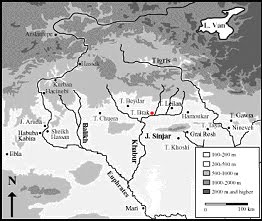
Tell Brak

Tell Brak
Site of archeological site in Northern Syria
Showing posts with label Max Mallowan. Show all posts

Tuesday, 27 July 2010

Tell Brak

I'm still gathering evidence and pondering on the case. The idea of simply following the route to Chagar Bazar doesn't seem sufficient to me. What's my purpose in this project? My inspiration is Ms Christie's memoir about her travels and her life at Chagar Bazar and Tell Brak. Like Ms Christie, my main purpose is more anthropological than archeological, although I am interested in ancient times. Again, like her, I'm more intriqued by the ephemera of every day life, which provides more personal indications of the life of the people. Eye idols don't do much for me I'm afraid. Why 'eye' anyway? Again, like Ms Christie, when I hear archeologists confidently explaining about what a lump of clay would have been used for 4,000 years ago, I find myself wondering 'how do they know?'. I feel the same way about economics which relies on predicting behaviour of people, when one of the best qualities of people is that they behave unpredictably so often.

Back to the point of this posting. I want to retrace the travel section, if at all possible by the Orient Express although the cost seems prohibitive (perhaps another of my preparatory tasks must be to find a sugar daddy toute suite). However, I want to spend time at the two archeological sites to drink in every day life and live within the landscape that Ms Christie loved so much. I want to see if there have been changes and allow a 21st century audience to see beyond the 'axis of evil' and the general fear of Arabs that is prevalent in the West. Just two weeks ago, at a small village produce show, an elderly Norfolk man made a comment about a photo taken inside a mosque in Oman.
Cor, you wouldn't catch me taking a photo in a mosque. Probably get blown up!

If I am to spend time at Chagar Bazar, or nearby, I will need to do something, preferably a paid job. Well, I can type, write and take photographs. I can cook plain food, clean and do laundry (although I expect local people can do the same and need the job more than I do). So, my current quest is to investigate how I can find a job in Syria. Seems a daunting prospect, but with determination . . .

Wednesday, 7 July 2010

The plot thickens

This project seems to be progressing at a snail's pace, but that can't be helped. I'm now in Norwich, England, for 6 weeks during the academic summer vacation. I've just spent a wonderful few hours in the Norfolk and Norwich Millenium Library (also known as The Forum) reading a fascinating biography of Agatha Christie, rich with the information that I need to prepare the background. The biography is by Laura Thompson entitled Agatha Christie: An English Mystery, published in 2007. Foolishly, I'm sure, I was excited by the fact that Ms Thompson is from Newmarket, just down the road from Norwich and I've taken it as a Good Sign. If possible, I need to acquire my own copy of her book which answers so many of the questions about Ms Christie's personal circumstances before, during and after the period she writes about in Come Tell Me How You Live.

As I surmised, her trips to Iraq with Max Mallowan were very special times, although it wasn't because of the archeology. I hadn't realised how bruised she had been by the infidelity of her first husband and the subsequent divorce. According to Ms Thompson, Agatha and Max were not in love, but enjoyed a beneficial relationship which met their individual needs well. I hadn't realised that she was 14 years older than Max and feel great admiration for her. I hope that something similar could happen to me, but then I'm neither famous nor rich. No-one is reading this blog for example, so this all bodes poorly for a final outcome for this project. But faint heart winneth nothing (or something like that).

Reading Ms Christie's circumstances during this period was fascinating and I am convinced that I am meant to follow through with this, somehow. Two main obstacles at the moment - finance and the fact that Iraq is still so unsafe.

One more thing - I was quite right about Murder in Mesopotamia. It transpires that the first victim was based on Katherine Woolley, wife of Leonard Woolley who was running the dig at Ur where Agatha met Max in 1930. Ms Thompson thinks that some of Max's characteristics were given to the character David Emmott in the book. Now I also realise that the strange protagonist, Nurse Amy, who's narrative voice is so different to Ms Christie's other well-spoken characters, is actually a facet of Ms Christie herself. I believe it's a kind of foil to the beautiful and manipulative Louise/Katherine.

Much more to come. I need to read The Hollow and Death in the Clouds next. The Hollow is considered to be one of her best books and Death in the Clouds was written in Beirut en route to Damascus, so may provide another reflection of her mind at that time.

Monday, 31 May 2010

They Came to Baghdad

Finished the second book on the list earlier this week. They Came to Baghdad (1951) is not a classic. It reminds me of an Enid Blyton book written for 'young gels'. It's difficult to relate to the protagonist, Victoria Jones, or Viccy as she is referred to by her pash, Edward. She's young, naughty, a bad shorthand-typist (I can relate to that), in 1930s terms, plucky and irreverent. But still of good stock since she's accepted wherever she goes in Iraq, including the British Consulate in Basrah. It's not a great read, but it is interesting from the perspective of my project. Ms Christie loved the Middle East and archeology and she must have relished writing the descriptions of Victoria's walking tour of Baghdad. It's one of the best parts of the book. After a strange kidnapping segment, our Viccy is rescued by an unlikely hero called Richard Baker. He's an archeologist and takes her to a Dig called Tell Aswad. I'm not sure if this is a real place, so will have to look it up on a map at some point. A small town called Mandali is nearby, if it isn't fiction.

Victoria finds the Dig to be a sanctuary from the undercover adventures she'd become involved with after making her way to Baghdad from London by devious means. Again, this description rings true and must reflect Ms Christie's own experiences while working with her husband, Max Mallowan. Written after WW2 and more than 10 years since she had spent those happy months in Syria and Iraq, I imagine that she would have been filled with nostalgia as she wrote those pages. Like Ms Christie, Victoria makes herself useful by developing photographs. I wonder who the book was written for, as she refers to Nazu pottery and the 'antika room'; terms which I don't know and would not expect the majority of readers to know either. Still, good fiction should educate too.

It's interesting to read the descriptions of Baghdad and Bashrah - places that were so different to the UK culture, but yet had their charms as described by Ms Christie. Now all we think about is war and violence. I would love to visit the places she refers to in the novel, but I would expect it is too dangerous just now.

Meanwhile, I've started Murder in Mesopotamia. This looks like a rich fund for my project as the story is set in an archeological dig. Hmmm.